
Google AI gave an incorrect answer: what should you do?
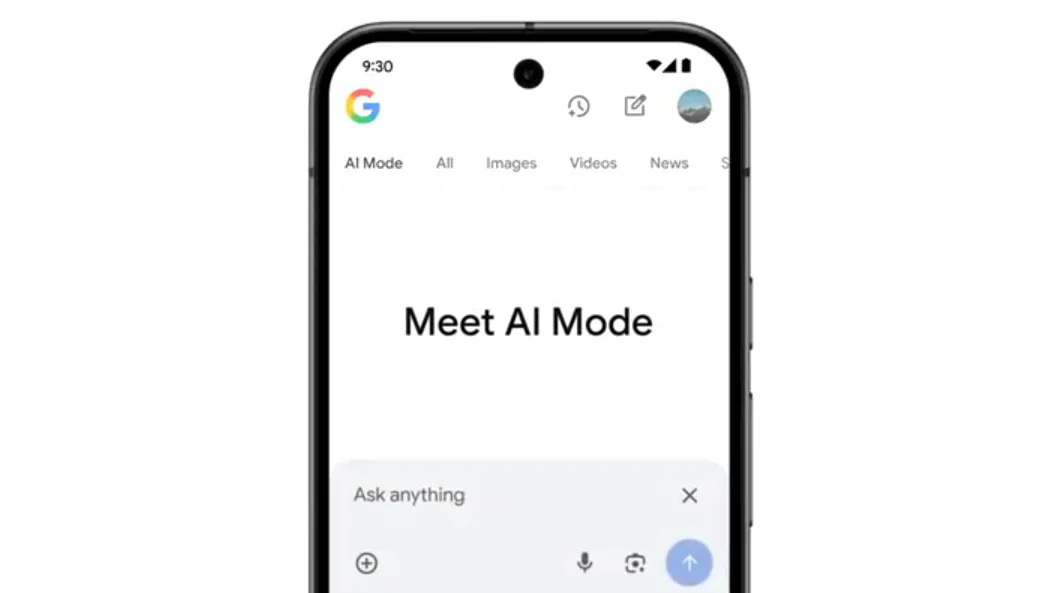
Google AI giving you false information: what should you do?
You type your name, or your company's name, into Google, and the AI confidently gives you a false answer. A conviction that isn't yours, a job title you no longer hold, or a business practice you have never engaged in. This false answer from Google's AI appears at the top of the page without you asking for it, and no one tells you who to contact to get it corrected.
Secure the evidence before taking any action
A generated response is not a static web page. It changes from one query to the next, from one device to another, and sometimes from one minute to the next; the phrasing that is harming you today may have disappeared by tomorrow. Everything therefore starts with evidence.
Take dated screenshots that show the question asked, the full response, and the date and time. Repeat the query several times using different phrasing, and keep every variation. Also, note the sources the AI displays to support its answer. If the statement does not appear in any of them, that is a valuable argument, as it shows the error comes from the AI itself and not from a third-party site.
When the stakes are high—such as your reputation, a tender, or fundraising—have the response formally recorded by a bailiff (commissaire de justice). Their report carries a probative weight that a screenshot will never have. And if you fear the evidence might disappear before you can act, Article 145 of the Code of Civil Procedure allows you to ask a judge for an investigative measure before any trial begins.
Report the error to Google, then send a formal notice
With the evidence in hand, report the error within the product itself. Google requires you to go through this mechanism before filing a legal removal request, and this report shows that you have followed the proper procedure. Then, fill out the legal removal request form, specifying the exact statements, the reason they are false, the supporting documents that prove it, and the legal basis for your claim.
Back up these steps with a formal notice sent to Google via registered letter. This establishes the date on which Google became aware of the error, which is crucial for the next steps: an entity that has been alerted and does nothing is much harder to defend than one caught by surprise. In Aachen, the court noted that Google had failed to react despite the doctor's report and formal notice.
You must also be prepared for these steps to fail. In that same case, Google replied that it would do nothing. As legal deadlines continue to run, it is better not to wait too long for a response that may never come.
Request rectification based on the GDPR
If the error concerns you as an individual, including as a director or sole trader, the GDPR gives you tools that press law does not. Personal data must be accurate, and Article 16 allows you to demand the rectification of inaccurate data. Since 2014, the Court of Justice of the European Union has recognised that a search engine operator is responsible for the processing of the data it displays. Google must therefore respond to your request within one month (extendable by two months if complex) and justify any refusal, while reminding you that you can refer the matter to the CNIL or a judge.
At the same time, request a restriction of processing. When you contest the accuracy of data, you can have it suspended from use while the controller verifies it, which in this case means asking for the disputed response to stop appearing during the review. In the event of a refusal or silence, you can file a complaint online with the CNIL, which regularly sanctions failures to uphold the right to rectification. You can also seek compensation for damages before a judge.
The Court of Justice has also ruled that a search engine must delist information whose manifest inaccuracy is established by relevant and sufficient evidence, without the person having to first obtain a court decision against the website publisher. In my view, this reasoning is applicable to an AI-generated response, but no decision has yet applied this right to this type of response.
Google will inevitably object that you cannot correct a model the way you correct a file. The requirement for accuracy is an obligation of means, and the CNIL accepts that the response to exercising rights should be proportionate, especially when it would require retraining the model. But your request does not need to go that far. Getting Google to stop displaying a specific statement, as German judges did by banning certain phrasings, is a measure that bears no comparison to retraining.
A company, however, cannot invoke the GDPR, which only protects individuals. The director whose name appears in the response can, however, do so for matters concerning them personally, and the company has other avenues, presented below.
Taking action for defamation or via summary proceedings in certain cases
When an AI's response harms your honour or reputation, for example by attributing a criminal conviction to you, it constitutes defamation. Press law then applies, with strict rules for the victim. The time limit for taking action is only three months. The legal proceedings must precisely define the incriminated act and cite the applicable text, under penalty of nullity. And it is not possible to bypass these constraints by falling back on common law civil liability, which the Court of Cassation has long prohibited.
Summary proceedings remain a useful route for quickly putting an end to a disturbance. A judge can order the necessary measures to stop a clearly unlawful disturbance, even if there is a serious dispute. However, the unlawfulness must be manifest, and the Court of Cassation has reiterated that damage to one's reputation is not enough on its own, as the author of the remarks may invoke truth or good faith. In practice, the more demonstrable the error—for example, if the AI has confused two people—the more viable the summary proceedings.
A company can also be a victim of defamation. Depending on whether the response targets its reputation or merely the quality of its products or services, the case will fall under either defamation or disparagement, and the boundary between the two is subtle. This classification determines the time limits and the procedure, which is why it is advisable to seek legal advice before taking action.
Finally, two questions remain open. Who is the author of an AI-generated response, and how can an algorithm's good faith be assessed? Furthermore, when does the three-month limitation period begin if the response is regenerated with every query? When in doubt, it is better to act without delay.
German judges have taken the leap
On 24 September 2026, the Regional Court of Aachen ordered Google to stop disseminating false statements about a doctor in its AI mode. The AI attributed a conviction for sexual assault and a dismissal to him, even though these facts concerned a different professional. The court ruled that the generated texts are statements attributable to Google, that Google could easily have verified their accuracy, and that it had failed to react despite being notified and formally put on notice.
In Munich, at the end of May 2026, another court had already ruled that AI Overviews associating two publishers with fraudulent practices were the responsibility of Google, which could not hide behind the role of a mere intermediary. The case ended in a settlement between the parties.
These decisions were made in summary proceedings and are not binding on a French judge. However, in my view, the reasoning is transferable. The status of a host only protects content provided by service users, not text written by the engine itself, and the Court of Justice of the European Union ruled in June 2026 that a platform that algorithmically organises the dissemination of content for its own benefit exercises control over it and loses this status. If simple ranking is enough to lose this protection, text written by the engine loses it even more so. No French decision has yet confirmed this.
Frequently asked questions
Is Google responsible for the responses of its AI mode?
According to two German courts, yes. The courts in Aachen (24 September 2026) and Munich (end of May 2026) ruled that these responses are statements attributable to Google. In France, no decision has yet been made, but the reasoning seems to me to be transferable.
How can I ask Google to correct a false AI response?
Report the error within the product, submit a removal request for legal reasons, and then send a formal notice by registered letter. If you are an individual, also request the rectification and restriction of processing under the GDPR.
Can a company request the rectification of a false AI response?
Not under the GDPR, which only protects individuals. A company can take action for defamation or disparagement, and its director can invoke the GDPR for data that concerns them personally.
What is the time limit for taking action in the event of defamation by an AI?
Defamation is subject to a three-month limitation period. The starting point is uncertain when the response is regenerated with every query, so it is better to act without delay.
What is the first step to take when faced with a false response from the AI mode?
Secure the evidence. A generated response changes from one query to the next, so you need dated screenshots showing the question asked, and a report by a judicial officer (commissaire de justice) if the matter is serious.
Tailored support
As a lawyer at the Paris Bar, I support companies and their directors in artificial intelligence law, data protection, and intellectual property. If a response generated by an AI damages your reputation, contact the firm to define the most appropriate path for your situation together and take action within the required timeframes.